October 05, 2026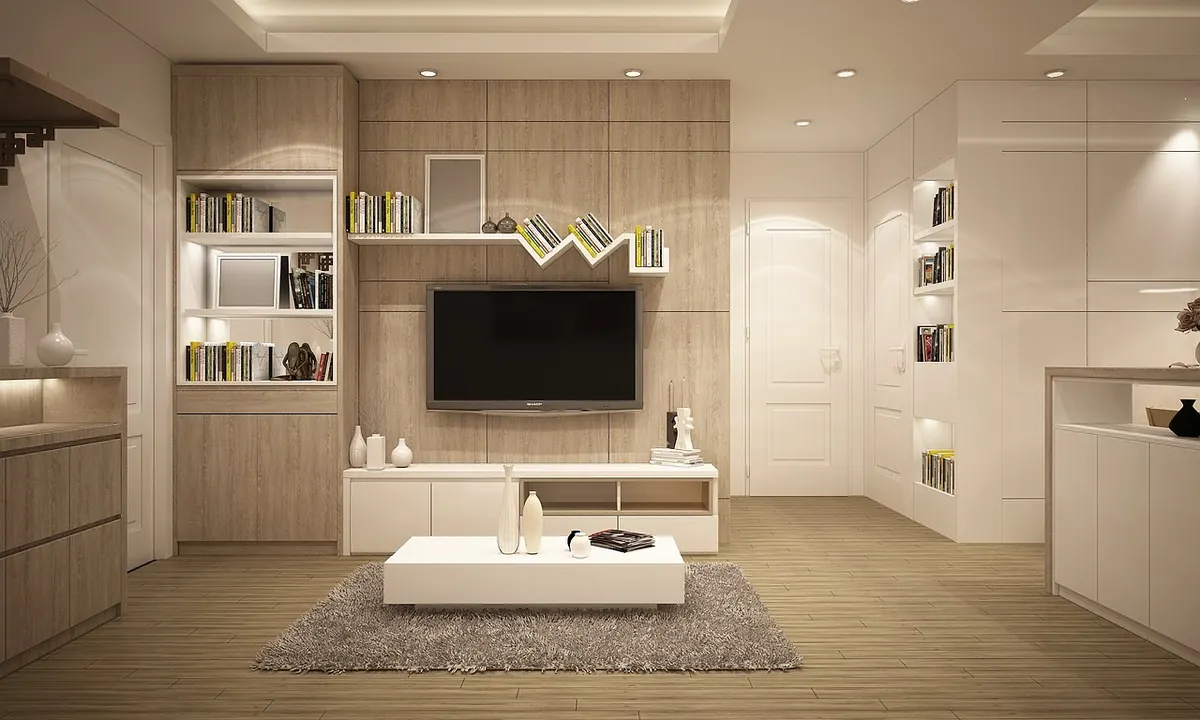
Most small living rooms don't have a storage problem so much as a visibility problem. The books, throws, remote controls and phone chargers all have somewhere to live — you can simply see every one of them. In a room measuring three metres by four, a single open shelf of mismatched boxes and tangled cables can make the whole space feel twice as busy.
The answer isn't more containers. It's storage that behaves like architecture: built in, shallow, painted to match the walls and quiet enough that your eye slides past it. Here's how to do that in a typical UK living room, whether you're working with a Victorian alcove, a new-build box or a rented flat where you can't touch the walls.
Measure first, then decide what actually stays
Before you buy a single basket, spend twenty minutes with a tape measure and a notepad. Small rooms punish guessing. Write down what genuinely needs a home in this room — not what you feel you ought to keep there.
- the width and depth of any alcove, including the skirting board
- floor to picture rail, and floor to ceiling
- the height and width of your tallest books, files or board game boxes
- radiator positions, plus the clearance they need
- door swing, window opening space and plug socket heights
Then be honest. Anything used less than once a month can usually move to a bedroom, a hallway cupboard or the loft. The living room should hold what you use daily, plus the things that make it feel like your living room. A quick test: pick the object up and ask where you'd look for it if you needed it in a hurry. If the honest answer is "the cupboard under the stairs", it doesn't need a shelf here.
Take one more measurement while you have the tape out: the walking gaps. Sofa to wall, coffee table to sofa, sofa to television. If any of those is under about 450mm, the room is already at capacity, and every new piece of furniture will make it feel tighter regardless of how clever it is.
Built-in joinery that reads as part of the room
Alcoves either side of a chimney breast are the classic UK opportunity, and shallow depths work best. Around 250–300mm takes paperbacks, DVDs and ornaments comfortably. Go deeper only if you need to house large board games, a record player or AV kit. In a typical Victorian terrace the alcove is often 900–1,100mm wide, which is plenty for narrow shelves and a cupboard below without burying the chimney breast.
Paint the joinery the same colour as the walls — shelves, uprights, everything — and it stops being furniture and starts being part of the room. Continue the skirting board along the base, or build the unit on a plinth, so it doesn't look bolted on. Cupboards below with solid doors, open shelves above, and a run of doors up to the ceiling for the things you touch twice a year.
Hardware matters more than you'd think. Push-to-open catches keep a small room handle-free and calm, though they need decent hinges to work properly. If you prefer knobs, use one style in one finish throughout, and keep them small. Skip glass doors unless you're happy to style what's behind them every week.
If a full run of joinery isn't in the budget yet, start at the bottom. Solid doors at skirting height remove the visual noise of boxes, cables and chargers immediately, and the shelves above can follow later. MDF with a sprayed finish looks convincingly built in; birch ply with a clear finish is warmer and more forgiving if you expect to move the unit to a different room.
Furniture that earns its floor space
Every piece in a compact room should do at least two jobs.
- A storage ottoman or lift-up coffee table: somewhere to put your feet, somewhere to hide the console controllers. Check the lid has a stay hinge — you don't want it crashing down.
- A window bench with a hinged seat: 450mm is a comfortable sitting height, and it takes a row of baskets underneath.
- A slim console behind the sofa: 250mm deep hides a lamp, a charger drawer and a pair of headphones without eating the walking space.
- Nesting tables: one surface in use, three when you have guests, none when you don't.
- A footstool with a lift-off lid: the least disruptive place to keep throws and cushions.
The test is simple. If you can't name the second job, the piece is costing you floor space without paying for it.
Use the height you already have
Most people furnish the bottom 1.2 metres of a room and leave the rest empty. A short wall next to a window, the space above a doorway, the strip over a desk — all of it is usable.
Tall, shallow shelving is the workhorse: 200mm deep, floor to ceiling, along a narrow wall, holding an enormous amount while barely intruding. Picture ledges of 60–80mm let you face paperbacks outward, which looks deliberate rather than messy. Wall-hung cupboards above eye level suit bulky, awkward items. Over-door hooks and a high shelf deal with bags and coats that would otherwise colonise the sofa.
Be careful with the space above a television or a fireplace. It reads as a shelf waiting for clutter, so either keep it deliberately sparse or use a closed cabinet.
Keep it calm: containers, colour and balance
As a rough rule, aim for about two-thirds closed storage and one-third open. Doors, drawers and lidded boxes do the hiding; the open third gives the room personality.
Containers work when they repeat. Choose one or two materials — rattan, matte cardboard, woven felt — and one colour family, then buy enough of the same shape that a shelf reads as a pattern rather than a collection. Baskets in three sizes and three different browns are the single most common reason a tidy room still looks untidy.
- Buy boxes that actually fill the shelf: a cube sitting with 40mm of air around it looks like an accident.
- Label the inside of a lid, not the front of a box.
- Group books by height rather than alphabet, and leave one deliberate gap per shelf.
- Keep the top shelf for things you like looking at, not things you need to reach.
A shelf with a gap reads as finished. A shelf packed tight reads as full — and in a small room, full is the thing you're trying to avoid.
Deal with cables once, then leave them alone
Cables undo more small-room calm than any amount of clutter. Group them behind the television in a single length of self-adhesive trunking, tie the spares with hook-and-loop straps rather than twist ties, and give charger leads one lidded box in the console drawer. A multi-plug with a two-metre lead, tucked behind the sofa, means you can charge a phone without a cable stretching across the rug.
When you can't drill: storage for rented rooms
Renting limits the fixings, not the ideas. Shallow freestanding pieces can do almost everything built-in joinery does, provided they're the right shape.
- A tall, narrow bookcase painted the same colour as the wall, with a single fabric strap fixed to a stud or a heavy-duty adhesive pad.
- A tension-pole shelving unit that wedges into an alcove floor to ceiling without a screw in sight.
- Over-door hooks on the living room door, for bags, coats and the ironing board that has nowhere else to go.
- Under-sofa storage trays on slim castors, for shoes, spare bedding and wrapping paper.
- Removable adhesive hooks for lightweight things only — check the weight rating, and test one on a hidden patch of wall first.
Two rules keep this approach looking intentional. Keep freestanding units flush against a wall rather than floating in the middle of the room, and repeat the material somewhere else — the same black metal as your lamp, the same oak as your coffee table — so the piece looks chosen rather than temporary.
Five mistakes that make a small room feel smaller
- Buying storage before measuring. A unit 50mm too deep blocks a door or a plug socket, and no amount of styling fixes that.
- Mixing too many finishes. Three wood tones plus two metals reads as noise. Pick two and hold the line.
- Filling every shelf to the edge. Space between objects is what makes storage look calm.
- Storing for other rooms. Christmas decorations and ski jackets belong in the loft, not in the room you sit in every evening.
- Skipping the reset. Storage only stays quiet if something puts the contents back. Two minutes at the end of the evening — one basket, one tray, one trip to the hallway — is usually enough.
Get those right and the storage disappears. What's left is the room you actually wanted: a place that holds a surprising amount without ever announcing that it does.
Photo: newhouse / Pixabay